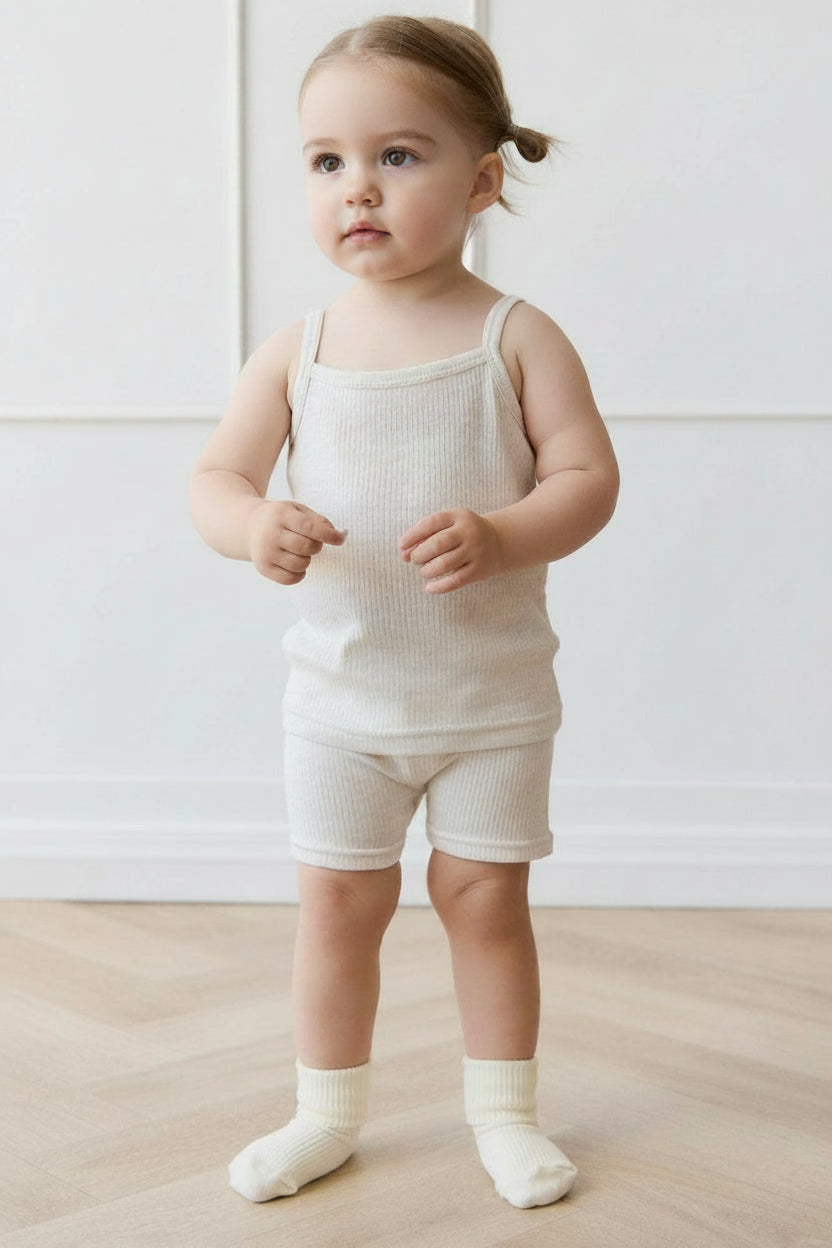
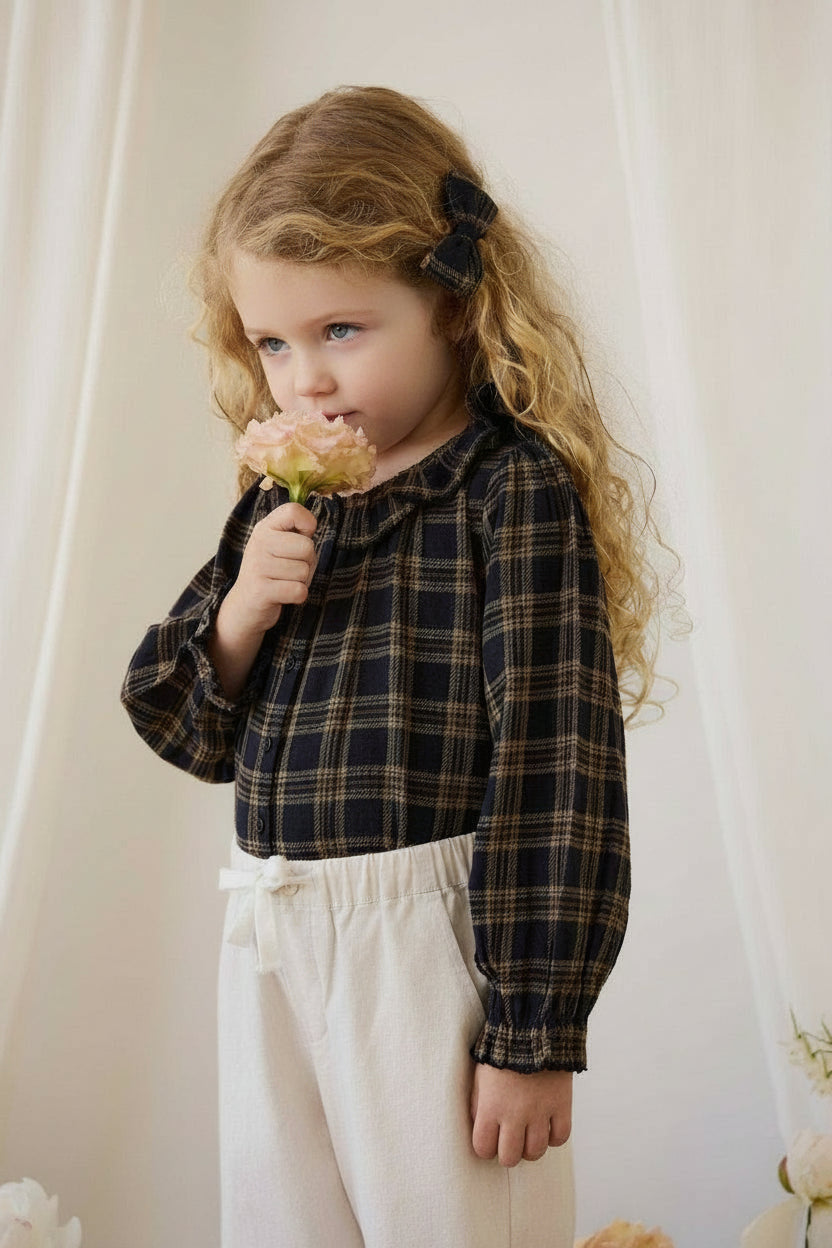
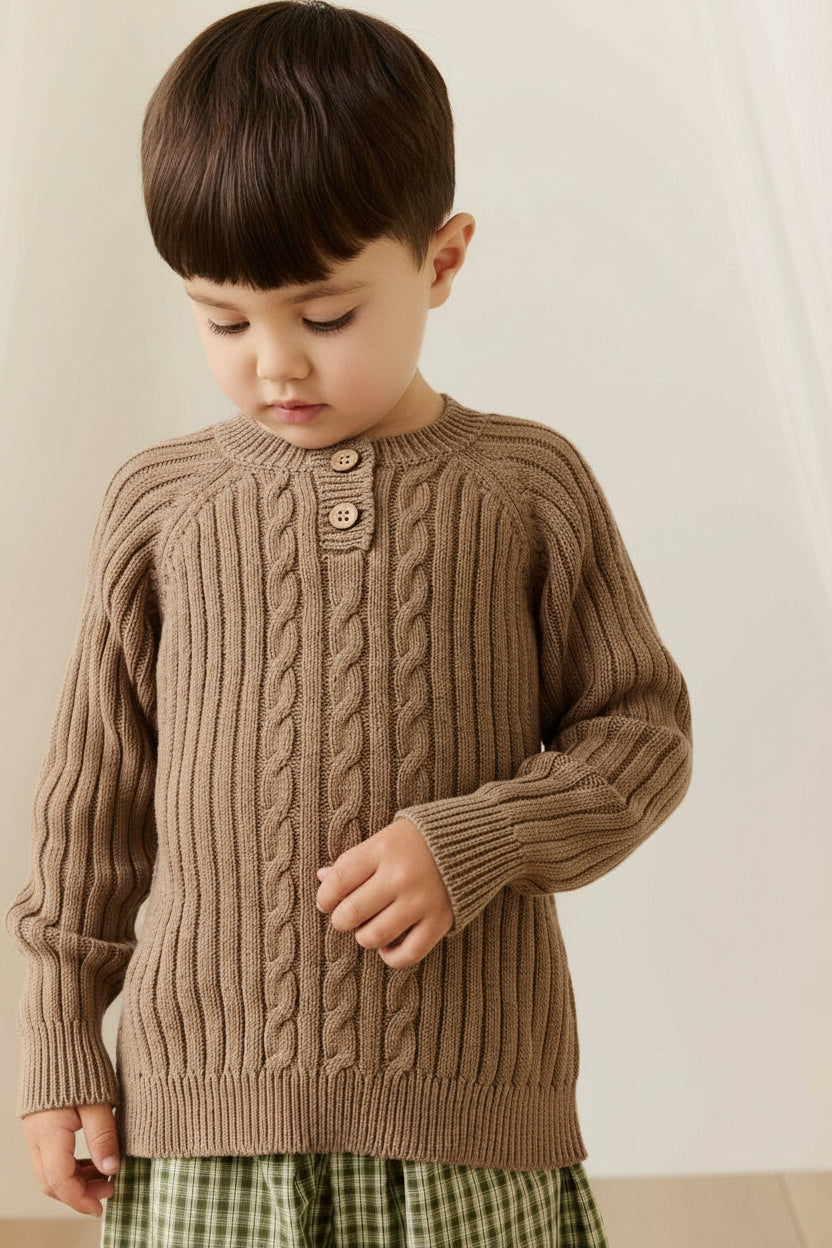
The fast-fashion industry exploits children's growth more directly than any other category. Kids outgrow clothes every two to three months, and the cheaper the clothes, the more often they're replaced. Slowing down isn't just an aesthetic choice. For kids' clothes, it's the more practical one.
The economics
A $5 t-shirt that lasts five wears is $1 per wear. A $30 t-shirt that lasts thirty wears, and is handed down for another twenty, is fifty cents per wear, and you've made one purchase decision instead of six.
The skin
Cheaper fabrics are often heavily treated. Babies' and toddlers' skin absorbs more of what touches it than adult skin. Slow-made clothing tends to avoid the chemistry that kids' skin can't process.
The aesthetic
Trend-driven kids' clothing dates quickly. Timeless, well-made pieces look like photographs of childhood, not photographs of trends.
How to make the switch (without buying everything new)
- Stop replacing what isn't worn out. The cheapest sustainable choice is the piece you already own.
- When you do buy, buy fewer and better.
- Lean on hand-me-downs. Ask family. Join a local parent group.
- Choose pieces in next year's size.
- Wash in cold, line-dry, fold instead of hanging knits.
What we try to do
At Kumfy Kids, we design pieces to outlast a single child. Reinforced seams. Generous hems. Snap fasteners chosen to last. We work on a smaller range than most brands and keep our core pieces running so families can replace what wears out without re-learning a whole catalog.
Slow doesn't mean fewer choices. It means choices worth making.